
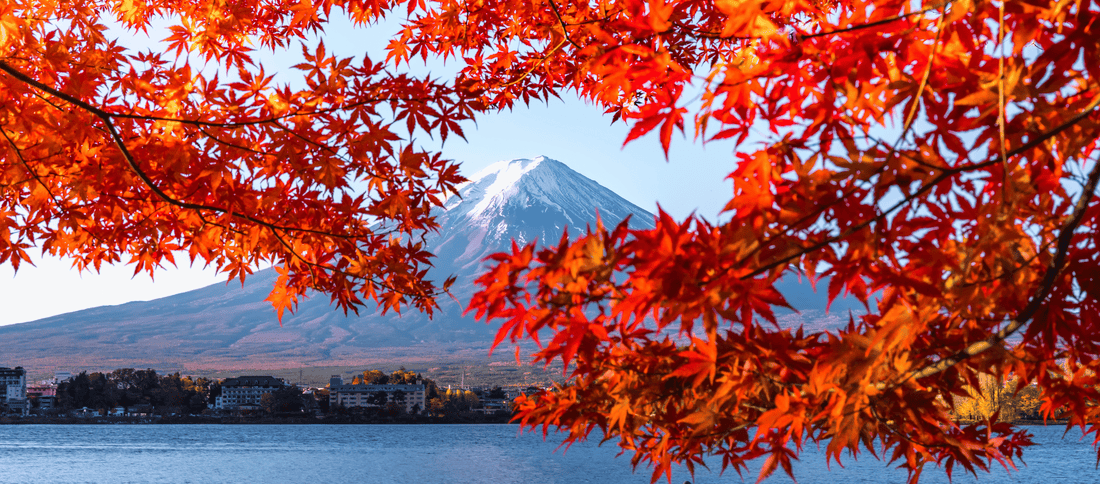
Momiji: the best spots to admire Japanese autumn foliage
The arrival of autumn in Japan brings one of the most poetic natural phenomena you can witness: momiji, the changing color of the leaves, especially maple leaves, which turn a thousand shades from golden yellow to crimson red. As with other natural events, such as hanami, momiji in Japan is also a genuine seasonal ritual that blends nature, spirituality and culture. During this period, the entire country turns into a mosaic of colors, offering scenes that look hand-painted and the chance to stop, contemplate and rediscover the harmony of nature.
If you're planning a trip and want to see momiji in Japan, here's a guide covering everything you need to know: from the best dates, to the most evocative locations, to practical tips so you don't miss anything.
Where to see momiji in Japan
Back in the Heian period (794–1185), the court nobility would gather in gardens to admire the autumn foliage and compose poetry; today millions of Japanese and travelers move by train or car across the country to reach the best spots to enjoy the spectacle. A great idea is to make use of the Japan Rail Pass, especially if you want to chase momiji with multiple Shinkansen trips.
Kyoto, the spiritual capital of momiji
If there's one place that embodies the spirit of foliage, it's Kyōto. Especially around its temples, which in autumn dress in intense colors that amplify their beauty.
At Kiyomizu-dera, one of the most beloved destinations, the panoramic terrace overlooks a sea of red maples, offering spectacular views especially at sunset. Eikan-dō, on the other hand, is famous for the reflections of its illuminated gardens and, although the momiji colors are less pronounced there, it's worth visiting in the evening too. At Arashiyama, it's the Togetsukyō bridge that provides the perfect frame for the surrounding mountains that seem to blaze with color.
Tōkyō, foliage in the metropolis
Can a modern metropolis like Tōkyō serve as the stage for an event of communion with nature like momiji? Indeed it can: in autumn the city's parks turn into a natural kaleidoscope, and the contrast between skyscrapers and colored trees creates unforgettable images. The nighttime illumination at Rikugien Garden makes the reddish hues of the maples even more intense. Ueno Park welcomes families and students eager to stroll along its picturesque avenues, perhaps as a break between shopping sessions in the city. Speaking of avenues, unmissable is the ginkgo avenue at Meiji Jingū Gaien: walking beneath the golden canopy is something magical that stays etched in memory. The Shinjuku Gyoen park is also very beautiful.
Nikkō, between nature and spirituality
A few hours from Tōkyō, Nikkō combines the charm of its UNESCO World Heritage temples with wonderful natural landscapes. Among the best places to see momiji in Japan are certainly Lake Chūzenji and the spectacular Kegon Falls. Here you'll find red maples that look like they've stepped out of a painting, their intense colors strongly contrasting with the traditional architecture of the shrines. The result is an evocative, almost mystical atmosphere that helps explain why Nikkō has always had a strong spiritual bond with nature: Buddhist monks considered these places sacred, and even today the foliage here is experienced as an almost meditative experience.
Hokkaidō, autumn's first breath
For autumn lovers, Hokkaidō is a wonderfully ideal destination. In Daisetsuzan National Park, in fact, the mountains turn color before any other area of Japan. Then, hiking trails, mountain lakes and hot springs allow for an immersive experience, in direct contact with still-wild nature.
Interestingly, in Hokkaidō momiji pairs with culinary tradition: during this period you'll find seasonal specialties such as kabocha pumpkin soup and matsutake mushroom dishes, perfect for warming up after a walk in the mountains. But we'll talk more about food later…
Kanazawa, the art of the garden
In Kanazawa you'll find Kenrokuen, considered one of the three most beautiful landscape gardens in Japan. Isn't that already enough to guarantee a fantastic momiji? In autumn, every path, bridge and pond gives life to evocative views, and where the colors reflect on the water the effect is almost surreal.
The garden was built to embody the six ideal elements of Japanese aesthetics: spaciousness, seclusion, artifice, antiquity, water and panoramas. In autumn, these principles are revealed in all their magnificence.
Miyajima, the island of maples
Near Hiroshima, the island of Miyajima is famous for its floating torii gate that seems to hover over the water. But in autumn it's Momijidani Park that steals the show, with hundreds of maples turning the paths red and orange. The atmosphere is made even more enchanting by the deer that populate the island and wander freely among visitors.
The island has been considered sacred for centuries: its original name, Itsukushima, means "consecrated island". So admiring momiji in this setting makes the experience even more spiritual.
Takayama, a journey through time
Nestled in the Japanese Alps, Takayama preserves a traditional atmosphere with its wooden houses and traditional markets. Walking through the historic districts dotted with red and yellow maples is like stepping back in time, into a Japan that seems to no longer exist. The surrounding mountains also take on warm hues that accentuate the old-world charm. It's the perfect place for those seeking a more intimate and authentic experience, away from the big crowds.
When to see momiji in Japan
The momiji phenomenon doesn't happen instantly across the whole country. In fact, Japan stretches over 3,000 kilometers from north to south, which means the foliage develops gradually over about two months, starting from the northernmost areas and then reaching the southern ones.
Following momiji therefore means chasing autumn across the country. It's an adventure that, in the Edo period, led samurai and merchants to organize actual autumn outings called momijigari, "maple leaf hunting". Of course, back then the distances that could be covered were shorter; today you can go farther and faster.
But how can you be sure of arriving in the right place at the right time? Well, Japanese TV news broadcasts daily updates on the progress of momiji, so people can enjoy the spectacle from home or move around with greater certainty. After all, nature isn't a Swiss watch, and an unexpected cold snap or a return of summer heat is enough to throw off the timing.
Generally speaking, in Hokkaidō the momiji season begins as early as late September, peaking between late September and mid-October. This is where foliage lovers head first, in search of the vibrant colors of the alpine forests.
Between mid-October and early November it's the mountain landscapes of Tōhoku (northern Honshū) that blaze red and orange. It's an area less frequented by foreign tourists but much loved by the Japanese.
Between mid-November and early December momiji reaches Tōkyō and the surrounding areas turn into a succession of golden ginkgos and fiery maples. However, the most iconic moment is between late November and early December, when the foliage reaches Kyōto and the Kansai region, where the beauty of the autumn colors is enhanced by temples, gardens and reflections on water.
Finally, even the southern island of Kyūshū offers incredible displays, with the foliage lasting until early December.
Admiring momiji isn't just about the right time and place, but also the right hour: early morning and sunset offer the most evocative light; however, some locations offer evening illuminations specifically designed to let you admire the shades of the trees even under a starry sky.
To not miss anything and follow momiji forecasts in real time, we recommend renting a Pocket Wifi: with internet always at hand you can check forecasts, plan your travels, and instantly share your best moments on social media.
Japanese autumn at the table
Momiji in Japan is a feast for the eyes, but it's also a chance to try typical autumn produce. Among the stars are roasted chestnuts (kuri), also used in traditional sweets like kuri manju; matsutake mushrooms, rare and highly fragrant; satsumaimo, Japanese sweet potato; and kaki, orange fruits that symbolize autumn here in Italy too. There are also seasonal versions of bentō, matcha tea and wagashi decorated with red and yellow leaf patterns, perfect to enjoy during a stroll among temples or gardens.


